

ChatGPT Ads Are Coming: What PPC Marketers Need to Know Before Everyone Else


Introduction: Why ChatGPT Ads Matter Now
For years, paid media has followed attention. First search. Then social. Now something new is happening.
More users are ending their journey inside AI-generated answers rather than clicking through traditional search results. When someone asks ChatGPT for recommendations, comparisons, or advice, the answer itself often becomes the final destination.
OpenAI has now publicly confirmed that advertising will be part of ChatGPT’s future. For PPC professionals, this is not just another channel to test. It represents a fundamentally different surface for paid visibility.
If this moment feels familiar, it should. Many of the early signals mirror what we saw when Facebook Ads first launched: limited inventory, low competition, and a period where learning mattered more than scale.
What OpenAI Has Actually Confirmed About Ads
There has been plenty of speculation about “ChatGPT ads,” but OpenAI has been unusually clear about its intent.
According to OpenAI’s published approach to advertising:
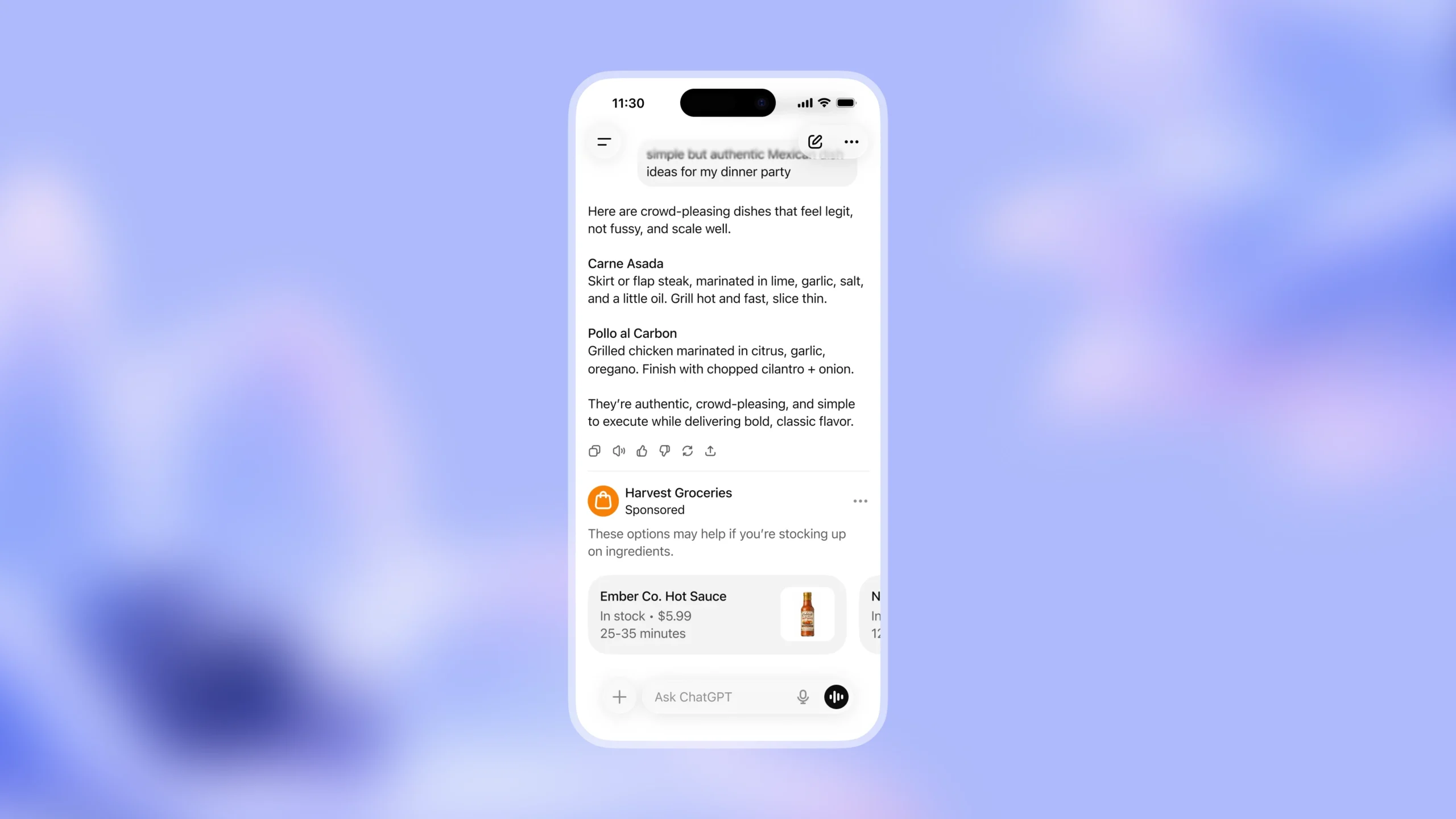
- Ads will appear directly within ChatGPT responses
- Initial rollout will be limited to Free and Go users in the USA
- Ads will be clearly labeled and transparent
- Paid placements will not manipulate or override organic answers
- Relevance and user experience are prioritized over volume
This is not a banner-style ad model, and it is not pay-to-win ranking inside AI answers. The goal is to introduce advertising in a way that supports access to the product while preserving trust in the responses themselves.
For marketers, this means ads are likely to feel more like contextual recommendations than interruptions.
How ChatGPT Ads Differ From Search and Social
At a surface level, it is tempting to compare ChatGPT ads directly to Google Search or paid social. That would be a mistake.
Key differences PPC teams should understand early:
- There is no traditional keyword auction as we know it today
- Context matters more than exact-match intent
- Fewer ad slots mean higher competition for placement
- Trust in the response carries over to the ad placement
In search, users expect ads. In social, users tolerate them. In ChatGPT, ads are likely to be interpreted as part of the answer itself. That raises the bar for relevance and positioning but also increases the potential impact when done well.
The Facebook Ads Parallel: Why Early Access MattersAnyone who ran Facebook Ads in the early days remembers how different it felt.
Back then:
- CPMs were low
- Targeting options were rough
- Best practices were unclear
- Small budgets could still generate outsized results
ChatGPT ads show similar early-stage characteristics:
- Limited advertiser access
- Small inventory
- No established playbooks
- High novelty and attention
Marketers who lived through the early years of Facebook Ads learned that mastering objectives, auction dynamics, and campaign optimization early paid dividends later (see PPC Hero’s Ultimate Guide to Meta Advertising).
By the time a platform is saturated, the advantage shifts from insight to spend. Early platforms reward learning, experimentation, and positioning. That window does not stay open for long.
Which Industries are Likely to Benefit First
That’s a more multidimensional one. At this point, though, I will give you two critical health checks that will help you uNot every industry will see the same early returns from ChatGPT ads. The strongest early fits share a few traits: high consideration, trust-driven decisions, and users already asking AI for guidance.
Industries likely to benefit early include:
- B2B SaaS and software tools
- Legal and professional services
- Financial services and fintech
- Healthcare services (non-pharma)
- High-consideration consumer services
These categories already see strong AI query volume around comparisons, recommendations, and “best option” questions. When ads appear within those answers, the distance between intent and action shortens significantly.
What PPC Marketers Should Start Doing Now
Even before ads are widely available, PPC teams can prepare.
Practical steps to take today:
- Audit how your brands already appear in AI-generated answers
- Identify high-intent informational prompts, not just transactional keywords
- Align landing pages with answer-based framing rather than ad copy alone
- Prepare for slower optimization cycles with higher signal quality
The mindset shift is important. This is not about chasing clicks. It is about shaping how your brand appears when AI explains a category.
What We Still Don’t Know (And Why That’s Normal)
As with any major platform launch, there are unanswered questions:
- Pricing models and bidding mechanics
- Reporting depth and attribution
- Creative formats and constraints
- Optimization levers over time
This uncertainty is not a red flag. It is a feature of every early advertising surface. The brands and teams that benefit most are usually the ones willing to learn before everything is standardized.
How Access Is Likely to Roll Out
Based on OpenAI’s messaging and past platform launches, access is unlikely to be immediate or open-ended.
Expect:
- Invite-only or waitlist-based onboarding
- Category prioritization
- Managed or guided setup in early phases
This is why many advertisers are already joining early access lists to stay close to updates and testing opportunities as they emerge. Some platforms, including independent tracking and monitoring tools, are maintaining waitlists specifically for brands that want visibility into ChatGPT ad rollouts and best practices as they develop. You can find one such waitlist here: https://llmlisted.com/chatgpt-ads/
Final Take: This Isn’t Optional for Serious PPC Teams
AI answers are becoming the endpoint for many user journeys. When that happens, advertising naturally follows.
ChatGPT ads will not replace search or social overnight, but they will reshape how paid visibility works at the top of the funnel. For PPC professionals, the opportunity is not just to run ads, but to help brands understand how they are framed inside AI-driven answers.
Those who engage early will shape the norms. Those who wait will inherit them.
If you want to track how this space evolves and be informed when access expands, keeping an eye on early ChatGPT ad updates and waitlists is a sensible first step. Updates and early access information are available here: https://llmlisted.com/chatgpt-ads/
